Astronomy
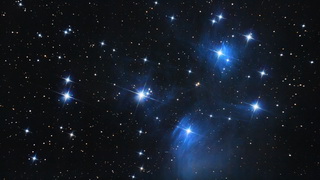
Deep Sky Objects
Astrophotography of deep sky objects using the Sky-Watcher BKP 150/750 EQ3-2 telescope.
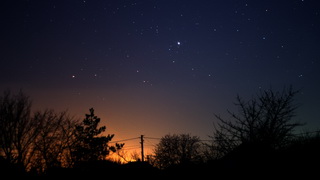
Saturn–Neptune Conjunction
The Saturn–Neptune conjunction is far from the most spectacular planetary close approach. Nevertheless, I considered the event interesting enough and decided to try to capture it.
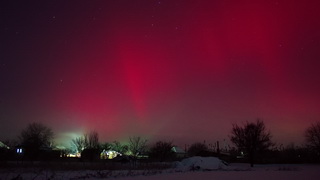
Polar Lights in Ukraine 2026
Recently — or more precisely, over the last few years — auroras in Ukraine, particularly in our city of Dnipro, have become quite a common phenomenon. If they used to be a great rarity, now they occur at least once a year.
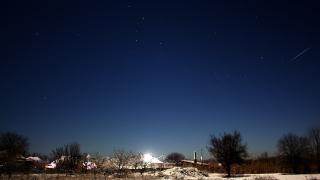
Quadrantids 2026
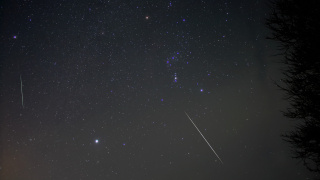
Just three weeks later, I managed to observe yet another meteor shower — the Quadrantids. This shower is considered one of the most powerful annual meteor showers, and it was my first time observing it.
Geminids 2025
This year, I once again managed to observe the meteor shower Geminids — fortunately, the weather allowed it and didn’t interfere too much with the observations.
Total Lunar Eclipse 2025
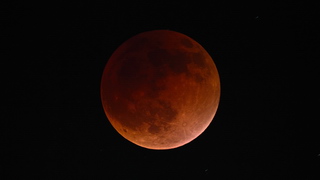
Observing the total lunar eclipse I've been waiting 7 years for: from the Moon rising in the Green Valley to viewing and photographing it through a telescope.
Perseids 2025
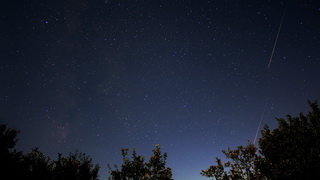
The Perseids are one of the most spectacular and intense meteor showers, occurring annually in August and visible in the Northern Hemisphere. Summer offers the best chance to observe them, as the nights are dark enough, and the weather often provides clear skies.
MoonRise over Dnipro city
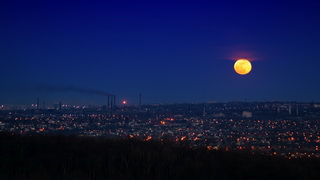
Decided to photograph the moonrise over our city in close-up. I wanted to capture a good photo of the city and the Moon above it. To do this, I rode my bike to a viewpoint near the military base in the Novokodatsky forest. The spot offers a great view of the city.
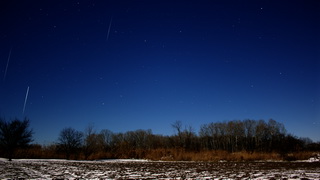
Geminids 2024
I observed the Geminid meteor shower for the first time, as the chance of clear skies in our region in December is extremely low. This year, however, I got lucky with a clear sky.
/c_2023_a3_(tsuchinshan-atlas)_320.jpg)
Comet C/2023 A3 (Tsuchinshan — ATLAS)
Photography and videography of Comet C/2023 A3 (Tsuchinshan — ATLAS) in Dnipro, Ukraine, using a Canon 550D camera. Photos were stacked in Sequator 1.61 and processed in ACDSee.
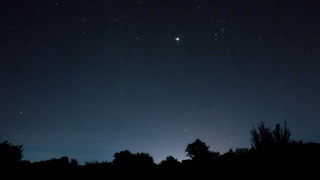
Jupiter-Mars Conjunction
It was a very close morning conjunction of Jupiter and Mars in the constellation Taurus, and the best one until 2033. The peak of the approach occurred on August 14, 2024.
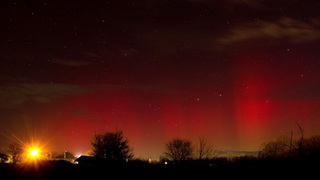
Aurora Borealis in Ukraine
For the first time in our region, the Aurora Borealis could be seen! In the past, one had to travel far north, for example to Norway, but now this breathtaking phenomenon has become visible here as well — right in Dnipro.
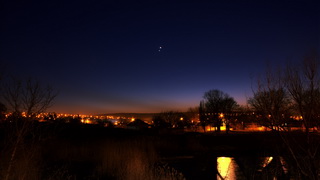
Venus and Jupiter Conjunction
In 2023, the brightest and most memorable conjunction of Venus with Jupiter. It was that spectacular close approach that many observed with the naked eye — the two brightest planets very close to each other in the western sky after sunset.
/c_2022_e3_(ztf)_320.jpg)
Comet C/2022 E3 (ZTF)
Comet C/2022 E3 (ZTF), also known as the "green comet", became one of the bright astronomical events of early 2023. It last approached the Solar System about 50,000 years ago, and its return made it an object of interest for amateur and professional astronomers around the world.
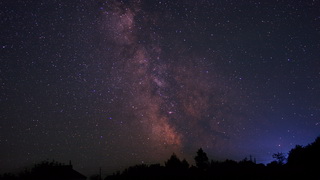
Milky Way
In the summer of 2022, a great opportunity arose to photograph the Milky Way right over our city without leaving it, and I decided to take advantage of it.
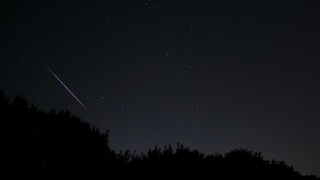
Perseids 2021
A wonderful bike trip to the star meadow to observe the Perseids, along with attempts to capture meteors in photos.
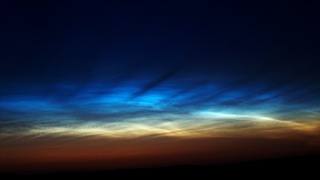
Noctilucent Clouds
Noctilucent clouds are one of the most mysterious and beautiful atmospheric phenomena that can be observed on summer nights. They attract the attention not only of nature enthusiasts but also of scientists, as they can serve as an indicator of global changes in the atmosphere.
Jupiter–Saturn Conjunction
One of the most discussed astronomical events of recent decades — the Great Conjunction of 2020, also called the “Christmas Star” or “Star of Bethlehem 2.0”. It occurred on December 21, 2020, during the winter solstice, when the planets were separated by just 0.1°. This was the closest visible Great Conjunction in nearly 400 years — since 1623.
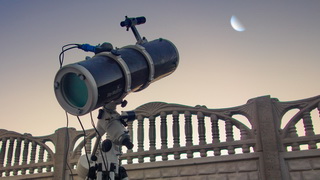
Venus in Ultraviolet Light
After taking numerous photographs of the evening Venus in ordinary visible light, I decided to try capturing it in ultraviolet. Moreover, the equipment allowed me to do this. The results should be interesting.
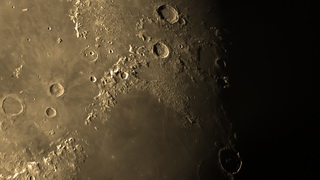
Moon
After photographing the main planets, I decided to switch to the Moon to capture close-up shots.
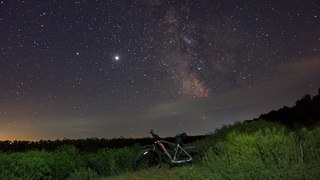
Perseids 2020
Past observations of the Perseids left vivid impressions. However, even on the outskirts of the city the conditions are far from ideal: light pollution, both global and local, significantly reduces the quality of observation. Therefore, it was necessary to look for a more suitable place with favorable conditions.
/c_2020_f3_(neowise)_320.jpg)
Comet C/2020 F3 (Neowise)
C/2020 F3 (Neowise) is a bright long-period comet discovered on March 27, 2020. During its appearance, it was possible to observe this celestial visitor and capture its beauty in the sky using various types of equipment.
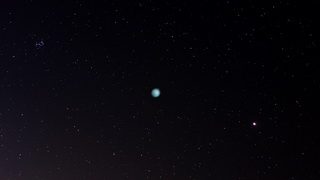
Uranus
Searching for and observing Uranus. Uranus is not the most commonly observed planet among amateur astronomers. Finding it, examining it, and especially photographing it is already a kind of extreme challenge.
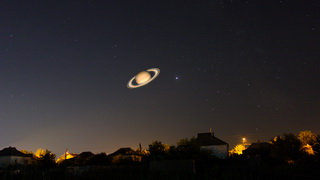
Saturn
Observation and astrophotography of Saturn in 2020 using an astro camera. Although Saturn did not have the best observing conditions this year, its rings were at maximum opening.
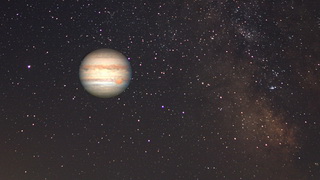
Jupiter
Astrophotography of the largest planet in the Solar System — in 2020. This year Jupiter had rather poor observing conditions due to its low position above the horizon.
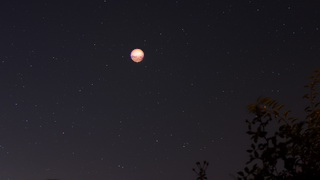
Mars
Observation and imaging of Mars in 2020 using an astro camera. This year, Mars will reach opposition, providing favorable conditions for observation and a fairly large apparent size of the planet. Such conditions will not occur again soon, so it is important not to miss this opportunity.
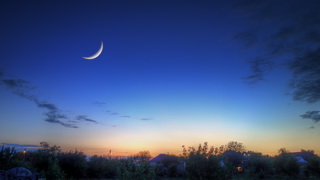
Venus
Observation of the brightest planet — Venus, during its evening visibility period. The imaging was carried out through a telescope using a Canon EOS 550D DSLR camera.
Mercury
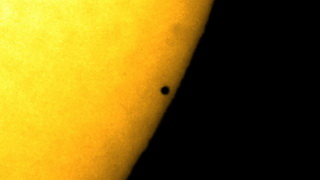
An introduction to Mercury — the closest planet to the Sun in our Solar System — and attempts to photograph it.