Noctilucent Clouds
Noctilucent clouds are rare formations in the mesosphere, at altitudes from 75 to 95 km above Earth's surface. They occur at the edge of space and consist of tiny ice crystals about 0.3 μm in size, which form around meteor dust particles or other condensation nuclei. I had heard about them many times before, but never had the chance to observe them. They are usually visible around the summer solstice, but in our latitudes, while not extremely rare, they are far from an everyday occurrence.
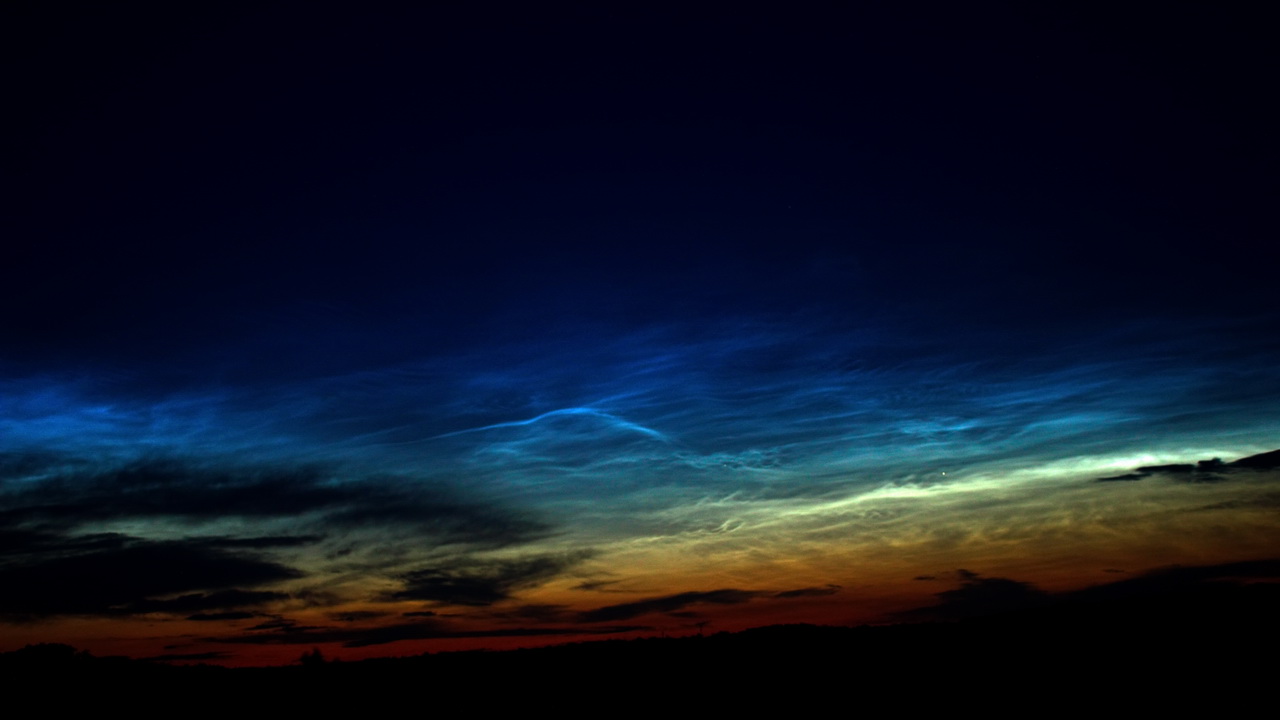
Clouds at sunset always decorate the sky, sometimes creating stunning scenes of the departing sun. But noctilucent clouds are something truly special — impossible to confuse with any other type. They appear as thin, wavy structures with a silvery-blue or white glow, resembling frost patterns on glass, and can take the form of filaments, bands, waves, or vortices. Unlike ordinary clouds, they seem to glow from within against the dark sky, and closer to the horizon they acquire a yellowish or golden tint. It looks truly magical. They are very thin, and stars shine through them easily.
In recent years, noctilucent clouds have been spotted in various regions of Ukraine, making them a relevant topic for local observations. I first saw them in Dnipro in 2020 — they looked breathtaking, but I didn’t take photos at the time. A year later they appeared again, and I decided I had to capture them properly. Taking good photos in the yard or around the neighborhood was impossible — trees and buildings were in the way, and a clear horizon in the northeastern part of the sky was needed for proper viewing. I chose a suitable location — the Kryuchky Tract in the western part of the city of Dnipro, in a forested area.
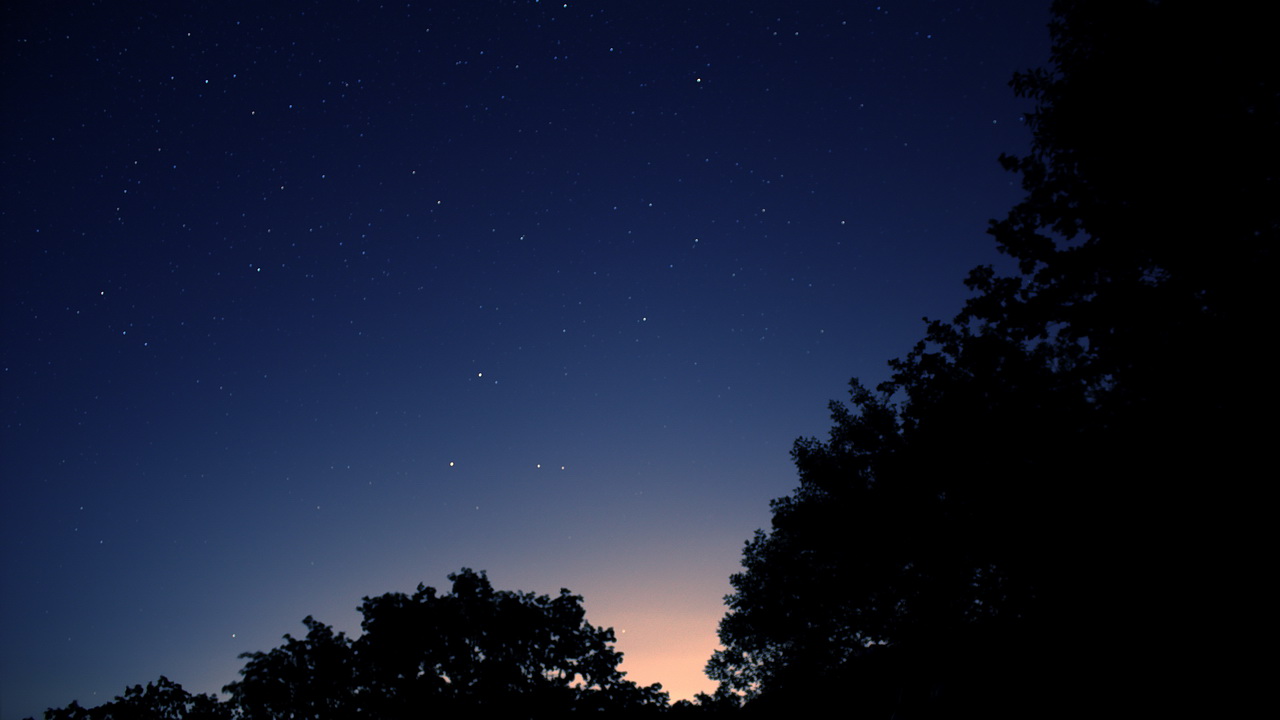
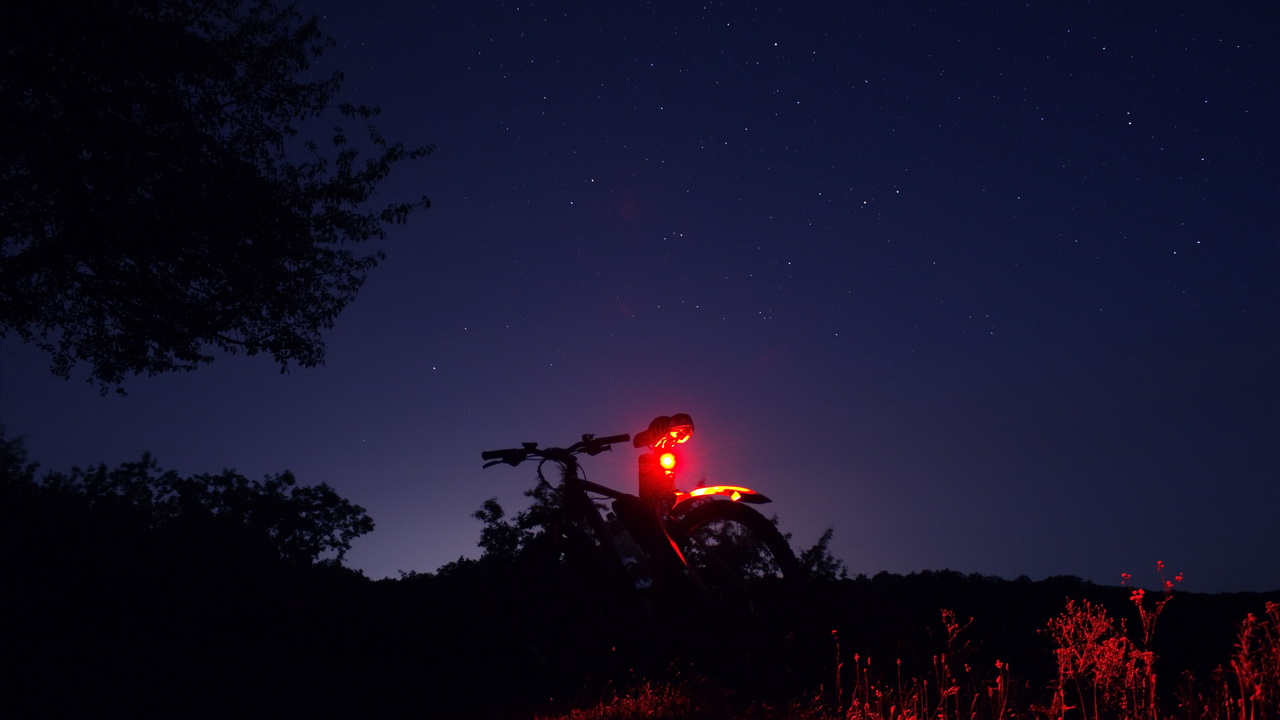
It was reachable by bicycle — about five kilometers, a 20-minute ride. So when I spotted mysterious glowing filaments in the still fairly bright sky, I quickly grabbed my camera and tripod and headed there. The observations were made not deep in the ravine but at the top — from there, an excellent view of the required part of the sky opened up.
Here are several photos taken on June 29, 2021. They clearly show bright, shining threads of noctilucent clouds with their characteristic bluish-pearlescent glow — they sharply contrast with ordinary clouds, which appear completely black. Noctilucent clouds do not darken against the twilight; instead, they shine brightly, making them easy to distinguish.
They reflect sunlight even after sunset, when the lower atmospheric layers are already in shadow. They are visible only during twilight, when the Sun is 6–16° below the horizon. Noctilucent clouds serve as a natural indicator of changes in the upper atmosphere and Earth's climate. Their frequency and brightness can signal an intensification of the greenhouse effect, which cools the mesosphere.
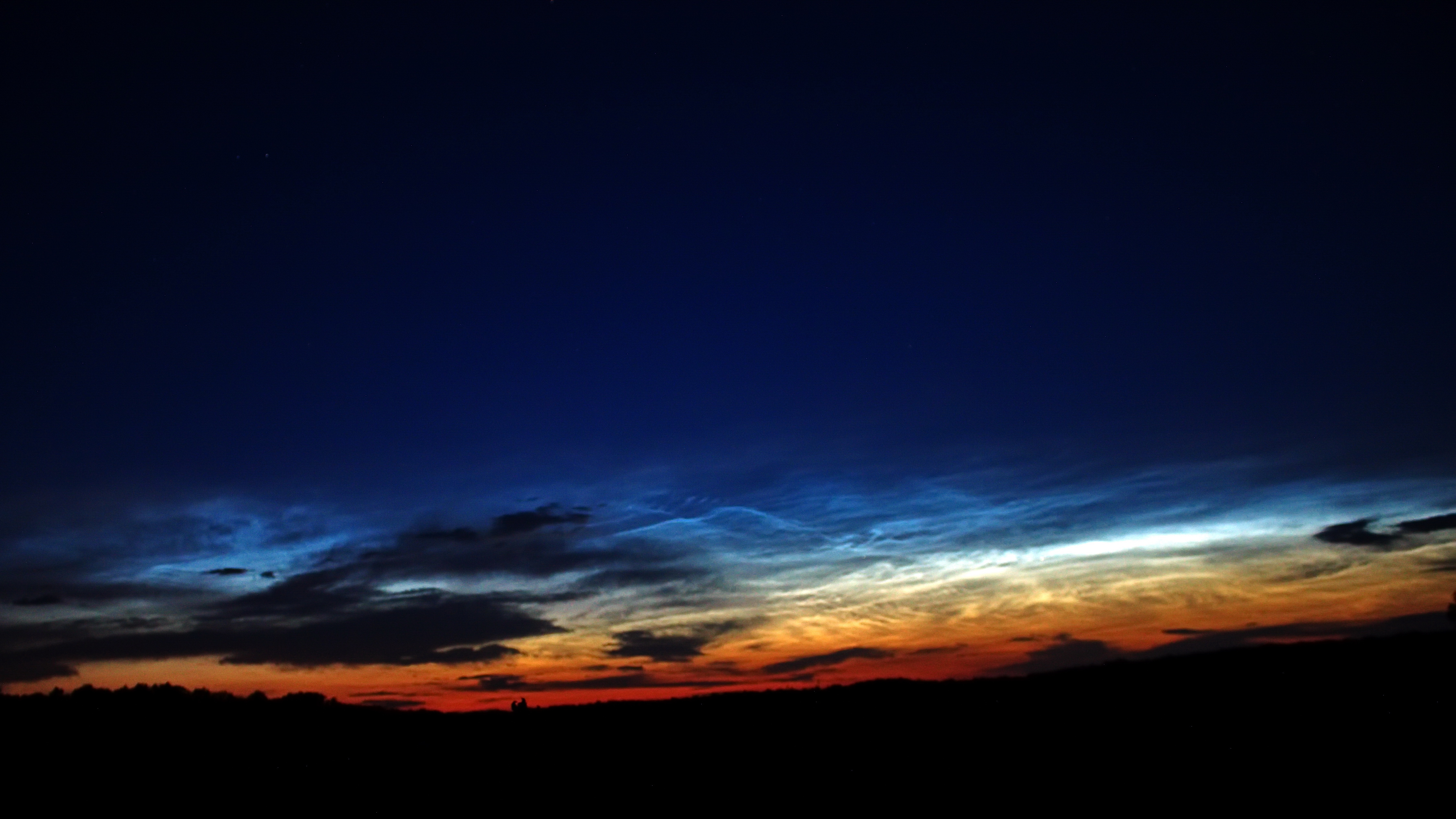
A few days later, noctilucent clouds appeared on the horizon again, and I went back to the Kryuchky Tract to take more photos. This time they were visible alongside dark ordinary clouds, creating an unusual picture that resembled a bright glowing eye with dark eyelashes. This was especially noticeable at the very beginning while I was still riding my bike. But the effect persisted afterward as well.
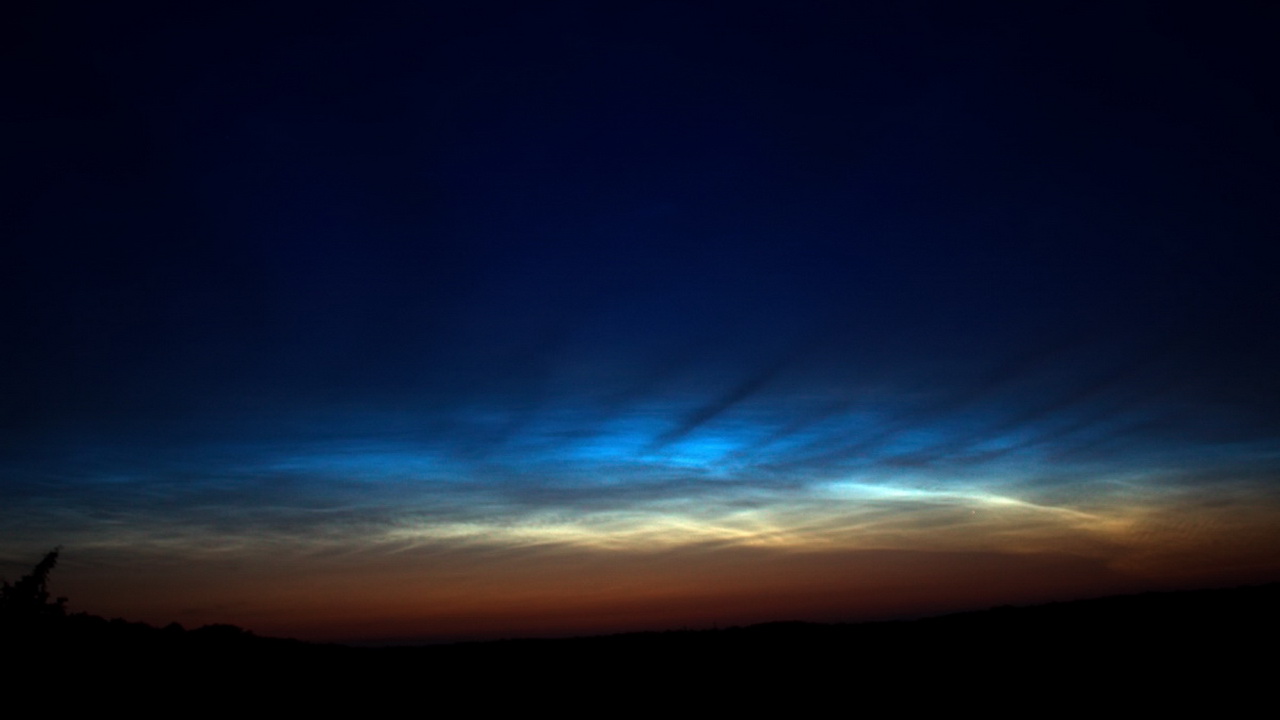
The observation spot turned out to be excellent, except for the incredible number of mosquitoes. There were already plenty of them those years, and here no repellents helped at all.
During the same periods in 2021, noctilucent clouds were also observed in other regions of Ukraine, and powerful displays in late June – early July were recorded across Europe. In recent decades, due to climate change, rising methane and water vapor levels, and sometimes rocket launches, they are occasionally “shifted” farther south, leading to anomalously active seasons at latitudes 45–50°. 2021 turned out to be one of those particularly bright and active years for our latitudes. From the photos I took, I compiled a timelapse that captures the dynamics of the noctilucent clouds’ movement on June 29, 2021, over about 10 minutes.