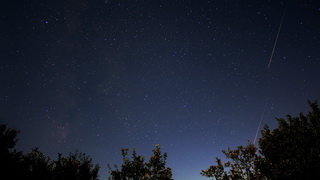
Quadrantids 2026
The year started off quite successfully — just three weeks after observing the Geminids meteor shower, another opportunity arose to see one more meteor stream — the Quadrantids. It might seem strange, but the weather once again allowed observations, literally clearing the sky at the right time, just like last time. The probability of clear skies at this time of year in our region is minimal, and the coincidence of clear weather with a meteor shower is a real rarity.
The observing conditions for the Quadrantids this year were far from ideal — the full Moon significantly interfered with observations. I wasn’t really counting on any noticeable results, but I still decided to observe since such an opportunity presented itself. Stargazing in itself is always beautiful and fascinating, and if you manage to see or capture something — that’s just great.
The weather that day was quite peculiar. Snow was still on the ground in the morning, then it rained throughout the day, causing almost all the snow to melt, and in the evening snow fell again. But closer to midnight, the sky unexpectedly cleared.
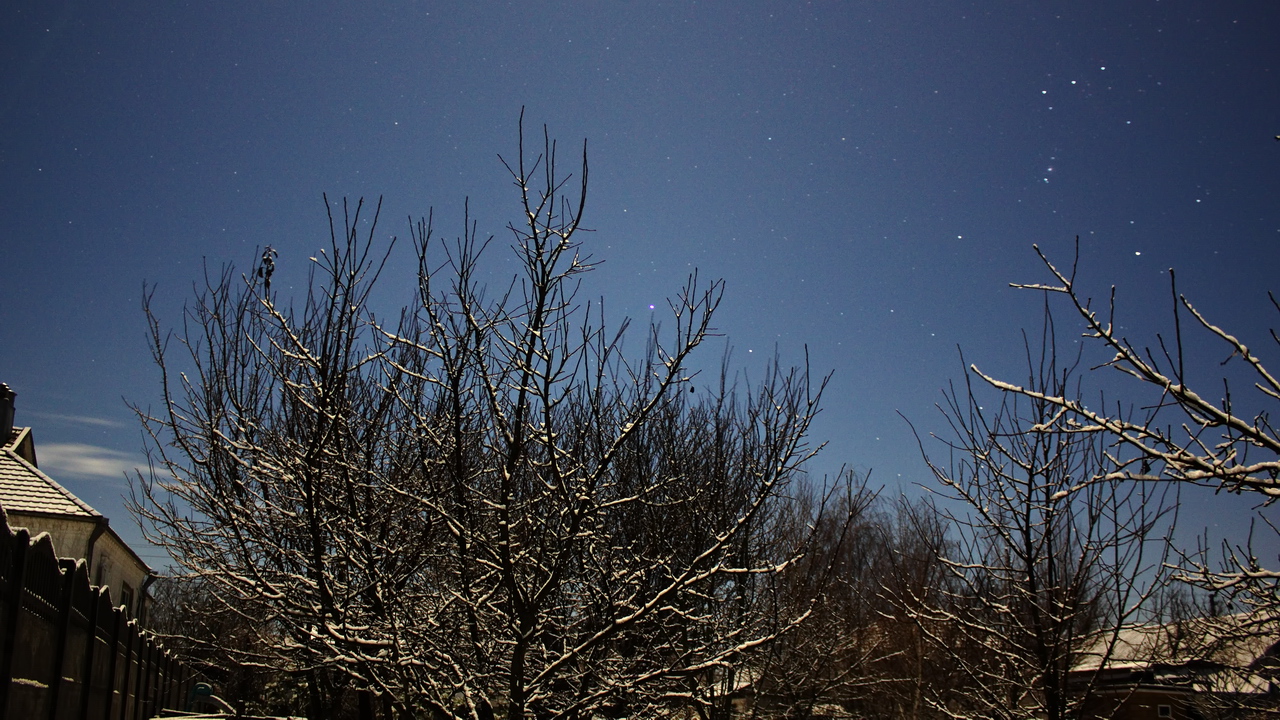
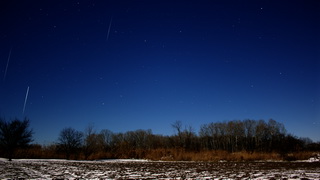
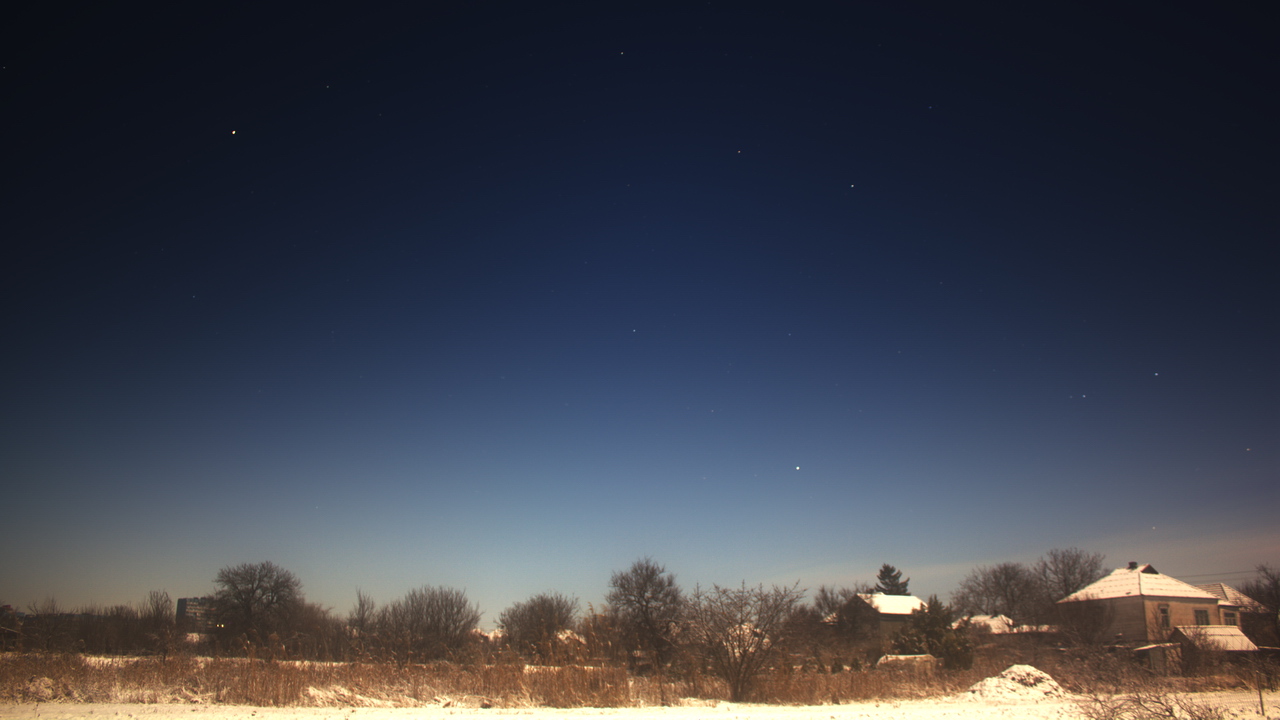
However, due to the full Moon, the number of visible stars in the sky was small — only the brightest ones could be seen. Additional light pollution was created by the freshly fallen snow, which reflected the moonlight and further worsened the observing conditions. Therefore, only the brightest meteors could be observed, and there are always far fewer of those.
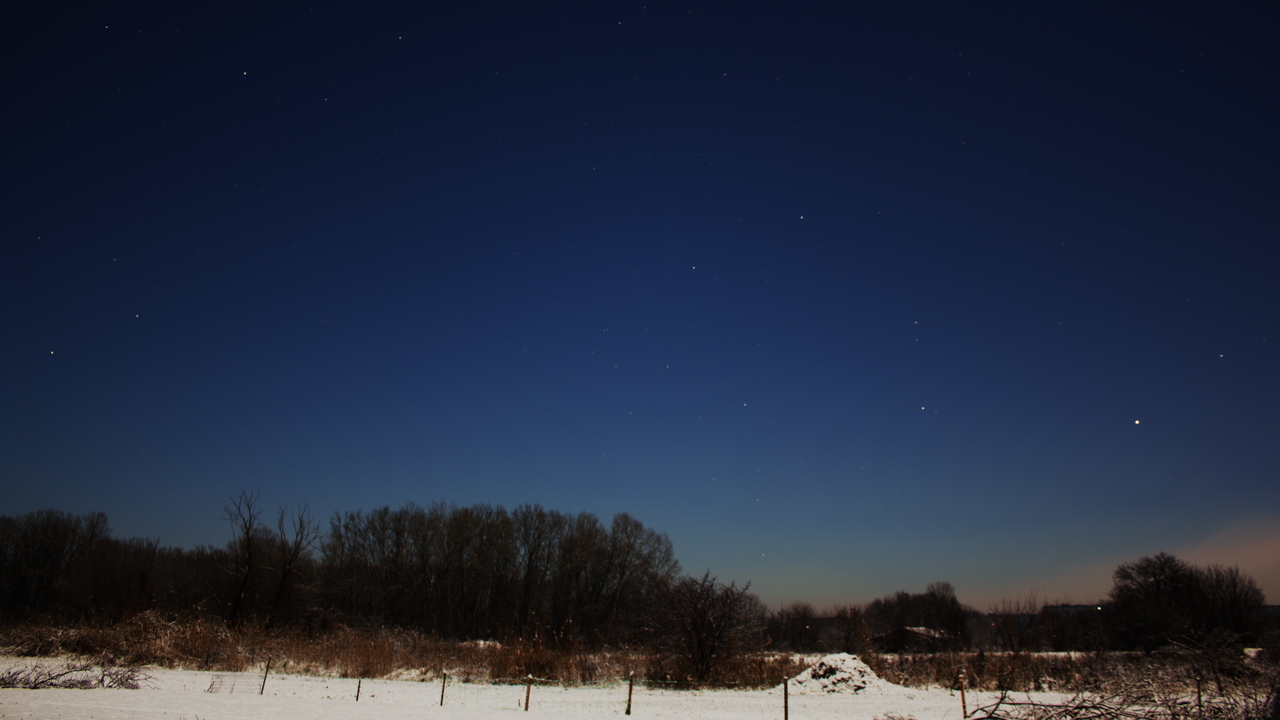
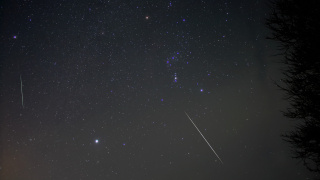
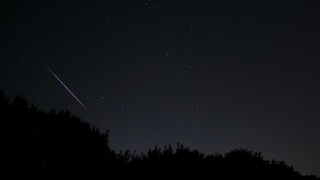
I began observing around midnight, when the sky had finally cleared completely. I had to wait quite a long time for the first “shooting stars,” carefully scanning the entire sky. Overall, in two hours of observing, I managed to see not that many meteors — only 9 in total. Mostly they were white, not very long meteors of medium brightness, plus a couple of reddish ones. Of course, this is not much compared to previous observations, but I did manage to capture one shooting star on photo, which, given the observing conditions and the small number of meteors, can already be considered a good result.
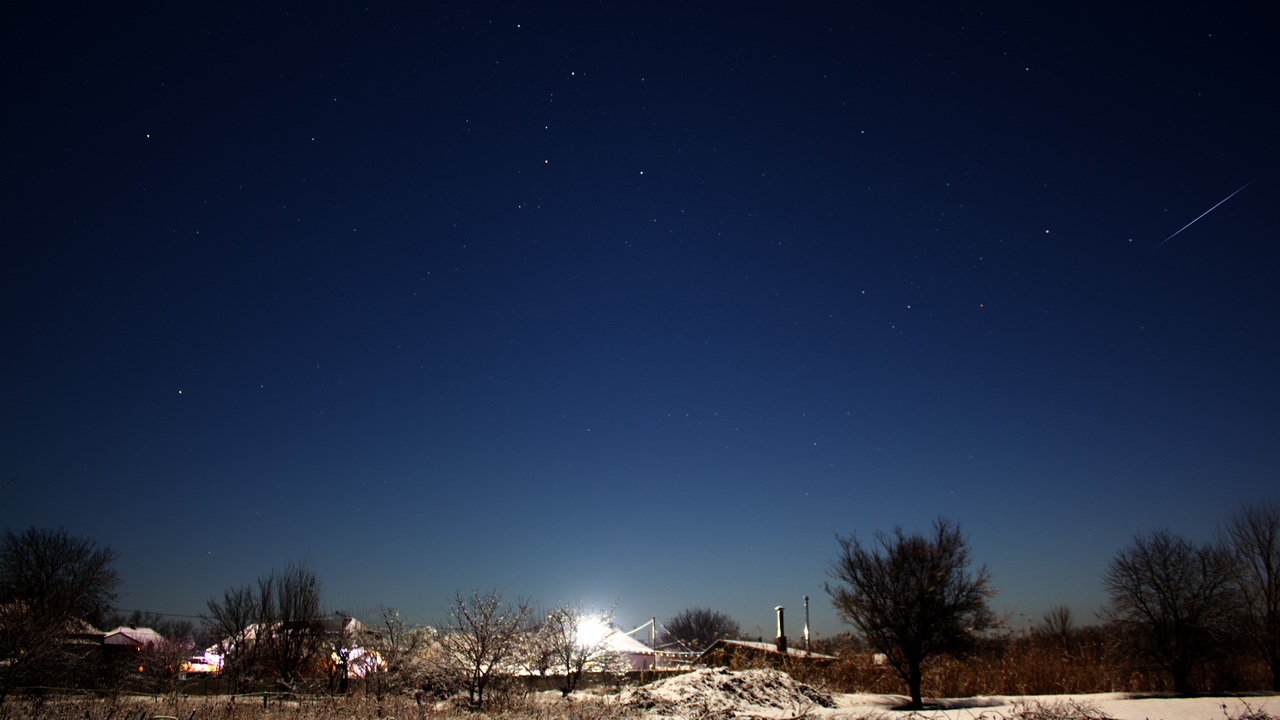
Unfortunately, due to high humidity that night, the camera lens began to fog up toward the end of the session, so I had to stop shooting.
Of course, 9 meteors in two hours isn’t a lot and doesn’t make as vivid an impression as, for example, observing the Perseids under more favorable conditions. However, taking into account the full Moon, sky light pollution, and weather factors, the result cannot be called poor. And if you consider the very fact that I was able to observe yet another meteor shower in winter — that’s absolutely wonderful.