Deep Sky Objects
Deep sky objects are nebulae, star clusters, galaxies, and other fascinating formations located very far beyond our Solar System. They are usually too faint to be easily seen with the naked eye, but in photographs taken with good equipment they reveal their full beauty.
This winter I decided to return to imaging deep sky objects with my Sky-Watcher BK 150/750 telescope on a motorized EQ3-2 mount. This activity requires a serious approach and tremendous patience. Especially when working in severe frost: you can’t touch the telescope with bare hands even for a second, and within a few hours all the equipment gets covered in ice crystals. But the clearest winter skies usually occur on exactly those freezing nights. And when you manage to get a high-quality result — all the discomfort is worth it.
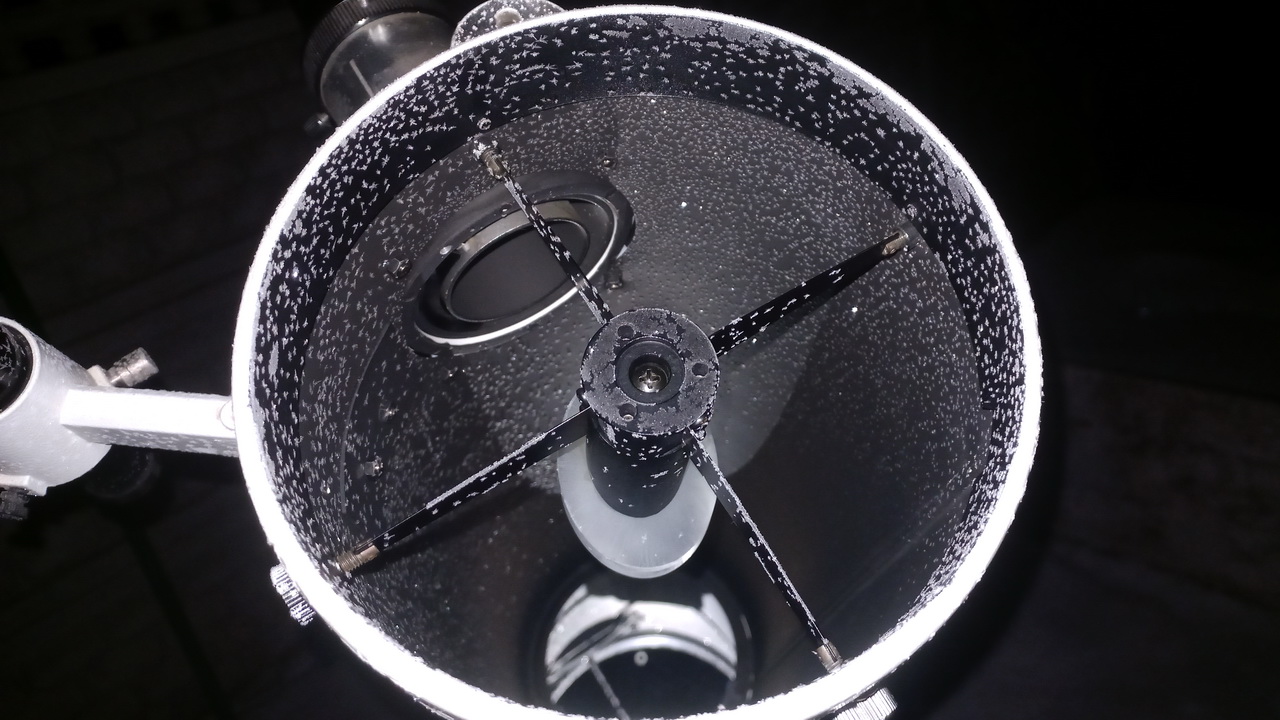
To get a good photo of a deep sky object, it’s not enough to simply attach a camera to the telescope and take one long-exposure frame. Usually dozens or even hundreds of individual long-exposure frames are captured, with total exposure time reaching several hours. Then all these frames are stacked and processed in specialized astronomical software. Only after this work does a proper detailed image appear — allowing you to pull out the faint light from distant objects. That’s why imaging a single object often takes the entire evening or even the whole night — it all depends on how faint and complex the target is.
Unfortunately, the motorized EQ3-2 mount is not really designed for deep-sky astrophotography. The tracking accuracy of this mount leaves much to be desired, and getting a sufficient number of usable frames is very challenging. Because of this, exposures are limited to no more than 30 seconds, and even then many frames turn out unusable — roughly 25–50% of 30-second frames get discarded.
All photographs in this article were taken with a Canon EOS 550D DSLR camera.
M45 — The Pleiades Open Star Cluster
The Pleiades is perhaps the most famous and brightest star cluster in our sky. It always attracts attention and can be easily found even in a city despite light pollution. With the naked eye, you can see 6–7 bright stars forming a little dipper shape. The Pleiades are located in the constellation Taurus. The angular size of the cluster is quite large — about 1.8–2°, and its distance is around 440–445 light-years.
In total, the Pleiades contain more than a thousand stars, but most of them are too faint to be seen without a telescope. By cosmic standards, the cluster is very young — about 100–125 million years old. The most interesting feature is that the Pleiades are surrounded by a delicate bluish reflection nebula. It is quite faint and invisible through a telescope, but in photographs it appears beautifully: thin dust clouds reflect the light of the bright, hot white-blue stars.
February 10, 2026, 148 frames × 30 sec, ISO 1600.
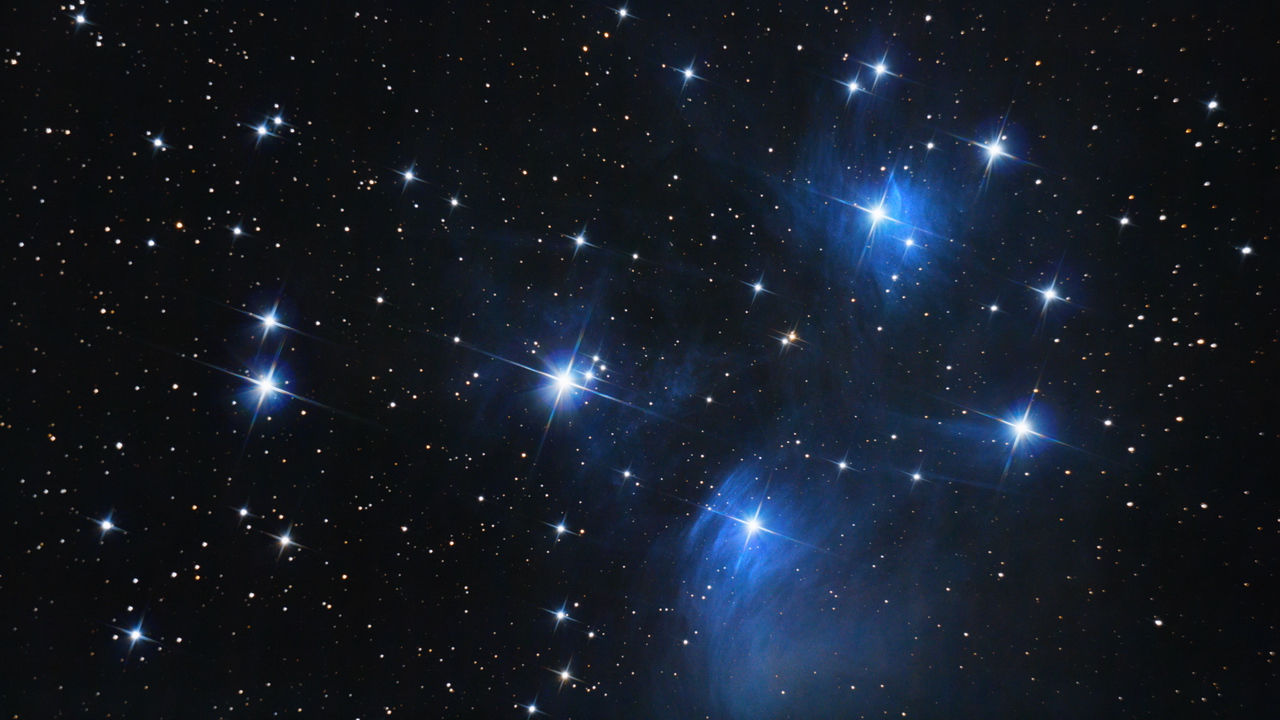
The Pleiades always look stunning, no matter what instrument you observe them with. For visual observation, it’s best to use low magnifications — no more than 30× — since the cluster is quite large in apparent size. And in the photo they turned out absolutely gorgeous; that night the sky was exceptionally clear, with very little city light pollution, which made it possible to capture a great image.
M44 — The Beehive Cluster
The Beehive Cluster, also known as Praesepe or the Manger, is an open star cluster located in the constellation Cancer. It is one of the nearest clusters to us — its distance is about 577 light-years, and its angular size on the sky is quite large — approximately 1.5°.
The Beehive is not as bright as the Pleiades and doesn’t immediately catch the eye, especially under urban conditions. Finding it in the sky is more difficult, especially since Cancer is not known for bright stars. On a good night it appears as a hazy cloud to the naked eye, but through any binoculars or telescope it resolves into a multitude of stars. The brightest stars have a magnitude of about 6ᵐ, so they are right at the limit of naked-eye visibility. The cluster is around 600 million years old and contains more than 1000 stars. It was observed in ancient times by Aristotle and Ptolemy, and the name “Praesepe” (manger) comes from its appearance resembling a feeding trough for donkeys in myths related to Dionysus.
February 19, 2026, 15 frames × 30 sec, ISO 800.
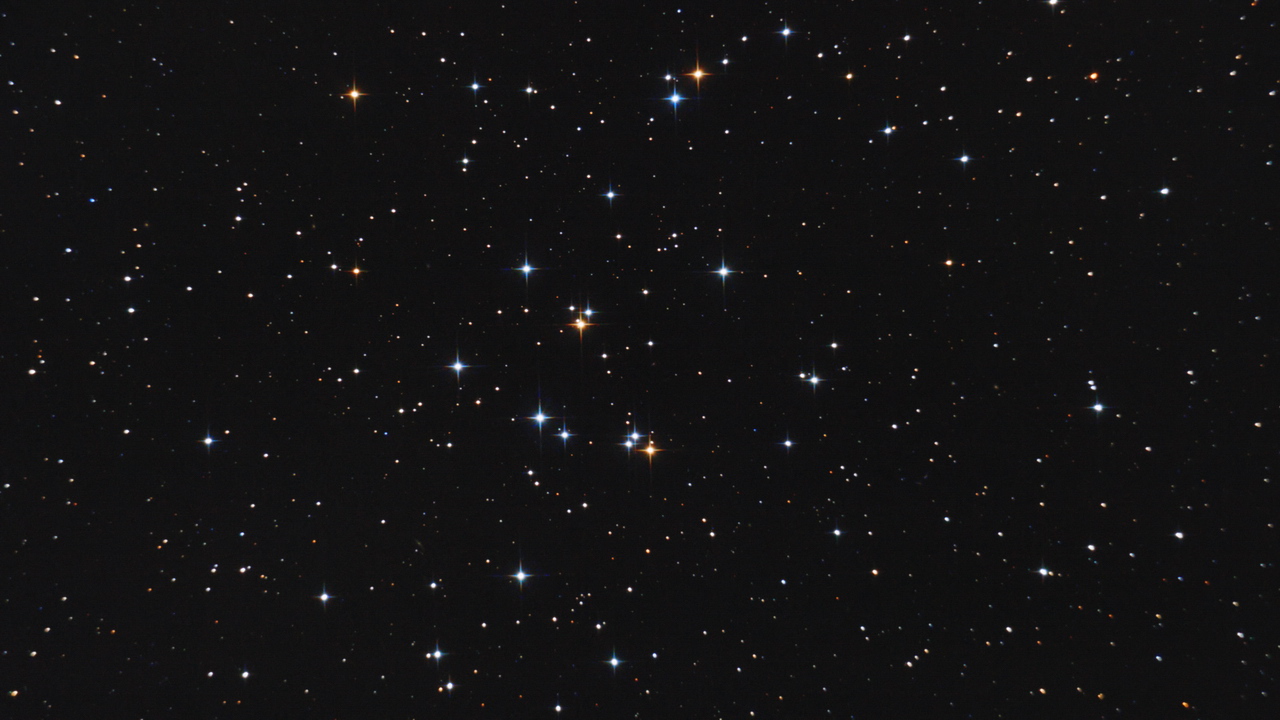
Since the cluster is large, low magnifications — no more than 30× — are also best for observing it, preferably with wide-field eyepieces. Unfortunately, the photo didn’t turn out as good as I hoped, because thin clouds soon began to cover the sky, so I couldn’t capture enough frames. Still, even in this image you can see a dense group of stars resembling a swarm of bees — hence the alternative name.
M81, M82 — Galaxies in the Ursa Major Constellation
M81 and M82 are one of the most beautiful and well-known galaxy pairs in the northern sky. They are located in the constellation Ursa Major and are approximately 12 million light-years away from us. Both galaxies belong to the M81 Group — a small cluster of gravitationally bound galaxies.
M81, also known as "Bode's Galaxy," is a large spiral galaxy with a bright compact core and well-defined spiral arms. In size and structure, it somewhat resembles our Milky Way. Its angular size is about 21×10 arcminutes, and its apparent magnitude is roughly 6.9m, making it one of the brightest galaxies in the sky.
M82, often called the "Cigar Galaxy," looks very different. It is a starburst galaxy with intense star formation. Due to gravitational interaction with M81, powerful bursts of star birth are occurring within it. Photographs clearly show its elongated shape and dark dust lanes crossing the bright central region. M82's angular size is about 9×4 arcminutes, with an apparent magnitude of approximately 8.4m.
February 21, 2026, 303 frames × 30 sec, ISO 1600.
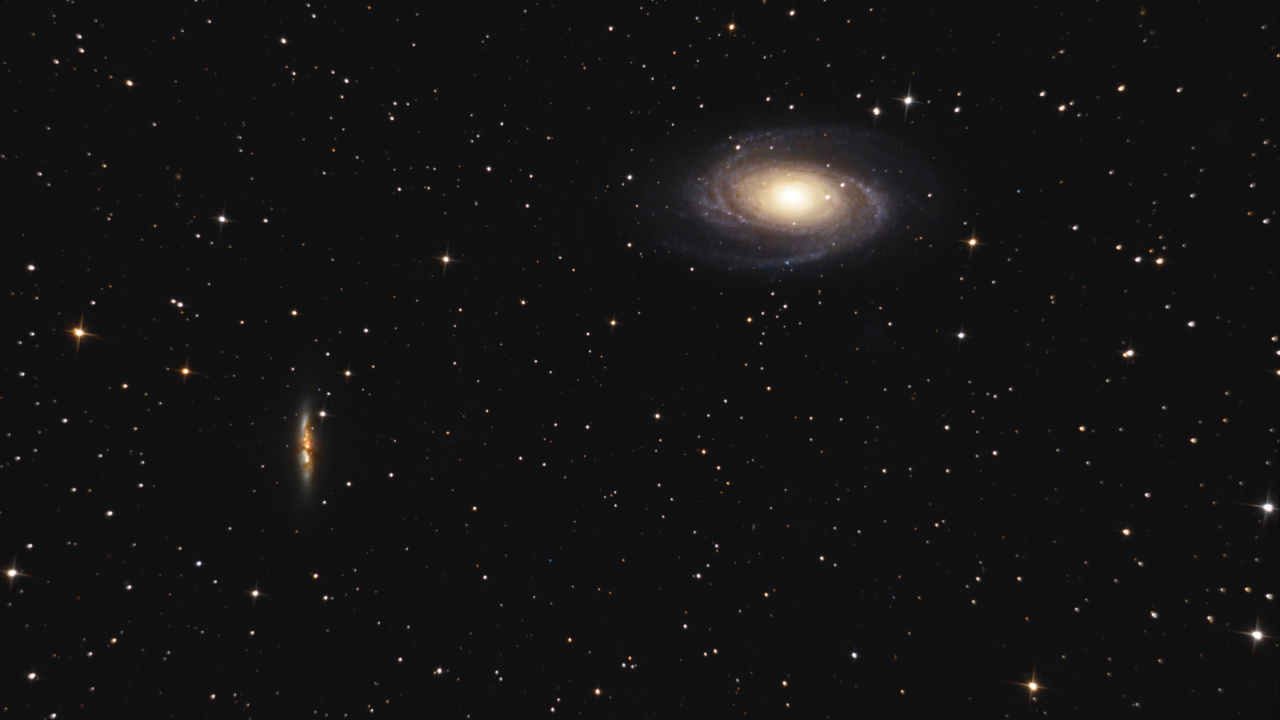
These galaxies are not visible to the naked eye, and even finding them in a telescope turned out to be not so easy. There are no bright stars nearby as reference points, so it took some effort to locate them. But once they appeared in the eyepiece field, they were hard to miss. M81 looks like a soft oval glow with a bright center, while M82 appears as a thin elongated strip of light with an uneven structure. At around 30× magnification, both galaxies fit comfortably in the same telescope field of view.
To be continued...