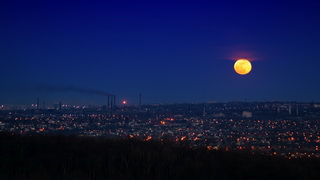
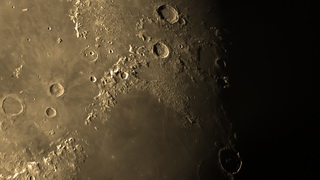
Total Lunar Eclipse 2025
I’ve been observing lunar eclipses since 2008. It’s a fascinating astronomical event that, unfortunately, doesn’t happen too often—especially if the weather doesn’t cooperate. The last time I saw a total lunar eclipse was 7 years ago, but back then, I didn’t have the means to properly capture it. Now, I have all the necessary equipment: a telescope and a DSLR camera with a long-focus lens. I’ve been waiting for this event for years—the main thing is that the sky stays clear.
Lunar eclipses come in three types: penumbral, partial, and total.
- Penumbral occurs when the Moon passes only through Earth’s penumbra. The disk dims slightly, and noticing the change without close attention is quite difficult.
- Partial eclipse happens when part of the Moon enters Earth’s shadow, creating a distinctive “bitten” dark area on the disk.
- Total eclipse is the most spectacular. It occurs when the entire Moon is fully immersed in Earth’s shadow.
However, total eclipses vary in “depth” and duration. If the Moon passes through the center of Earth’s shadow, such an eclipse is called central. It lasts the longest—sometimes over an hour and a half in the total phase. During these moments, the Moon takes on a rich, dark red hue, sometimes almost disappearing from view.
If the Moon’s path is closer to the edge of the shadow, the total phase is shorter, and the coloring is brighter with a pronounced gradient: one edge may be dark red, while the other is golden-orange. Astronomers express the Moon’s immersion in Earth’s shadow through the parameter “gamma” (γ) and the relative diameter of the shadow. The closer γ is to zero, the more central the eclipse and the more striking it is.
The eclipse on September 7, 2025, is not central: the Moon passes through the shadow off-center. Thus, the total phase lasts about 1 hour and 22 minutes—quite long. The Moon’s coloring is expected to be vivid, with a beautiful transition of shades. For observers, this is a bonus: such eclipses are particularly picturesque.
According to astronomical software calculations, the total lunar eclipse was set to occur on the evening of September 7, 2025. For the city of Dnipro, the circumstances were as follows:
These details highlight a few key points. First, the eclipse occurs at a convenient time—in the evening and before midnight, so no need to sacrifice sleep. Second, a downside is the Moon’s low altitude above the horizon. In urban settings, this can hinder observations due to buildings, trees, and other obstacles. Additionally, image quality through a telescope noticeably degrades at altitudes below 30°: the atmosphere distorts the image, making it “blurry.” The most interesting parts of this eclipse happen below 18°. But there’s nothing to be done about it.
The penumbral phase begins before moonrise, so the Moon should appear slightly darkened as it rises above the horizon. This phase progresses gradually, but the dimming is still noticeable. The umbral phase starts just 17 minutes after moonrise.
I decided it would be a great idea to capture the moonrise, partially immersed in the penumbra, against the local landscape, as well as the first contact with Earth’s shadow. This was to happen during daylight hours. For such shots, an unobstructed horizon and preferably a scenic view are needed. Finding a suitable spot wasn’t easy, so I rode my bike to Green Valley, at the top of Diiivka—a meadow where goats and sheep are usually grazed. From there, there’s a great view to the east, with the Novokodatsky Forest on the other side of the valley. Capturing the moonrise over the forest seemed particularly appealing. Plus, the trip was short—only 4–5 kilometers—and after the initial shots, I could quickly return home to continue photographing through the telescope.
That very meadow where I met the moonrise. The horizon here is flat and open from northeast to southeast. That’s exactly where, above the forest, the Moon was supposed to appear.
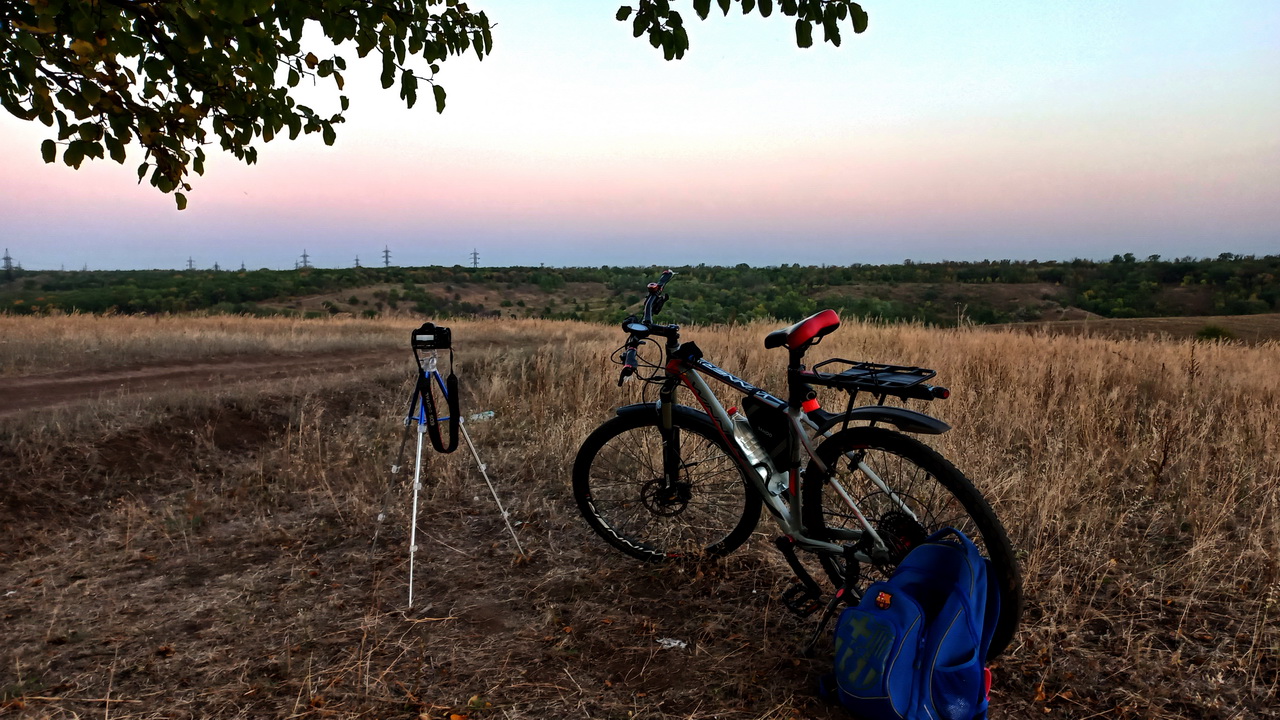
I arrived about 15 minutes before moonrise. I shot with a Canon 550D using a Jupiter-37A lens with a 135 mm focal length and a simple tripod. Calculations predicted the Moon would appear at 19:10, but it emerged 6 minutes later. Usually, on a bright evening sky, even a full Moon isn’t immediately noticeable. I also expected it slightly further south, but it seemed to “get tangled” in the power lines. That added a unique charm. The slight darkening of its left edge—due to the penumbral phase—was immediately noticeable. It turned out beautifully and unusually.
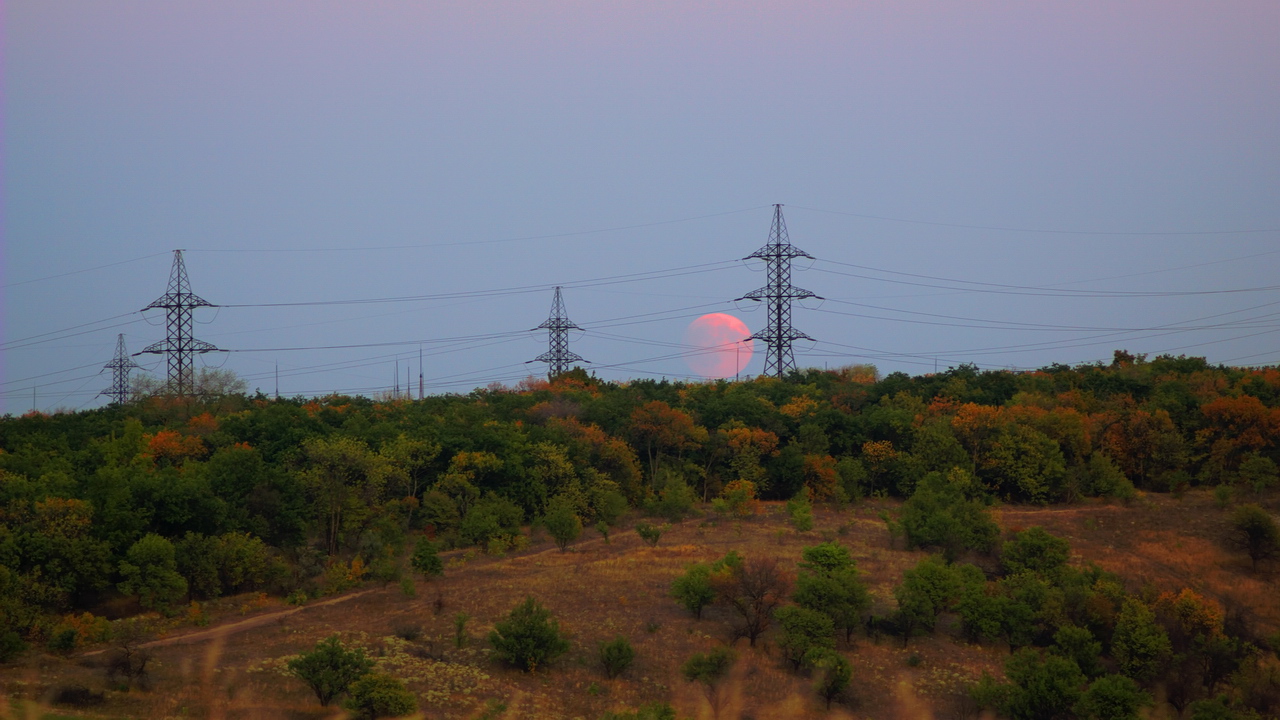
Waiting for the start of the umbral phase took just over ten minutes. And then, the moment arrived: the first contact with Earth’s shadow. Everything unfolded smoothly, without abrupt transitions, against a still fairly bright sky.
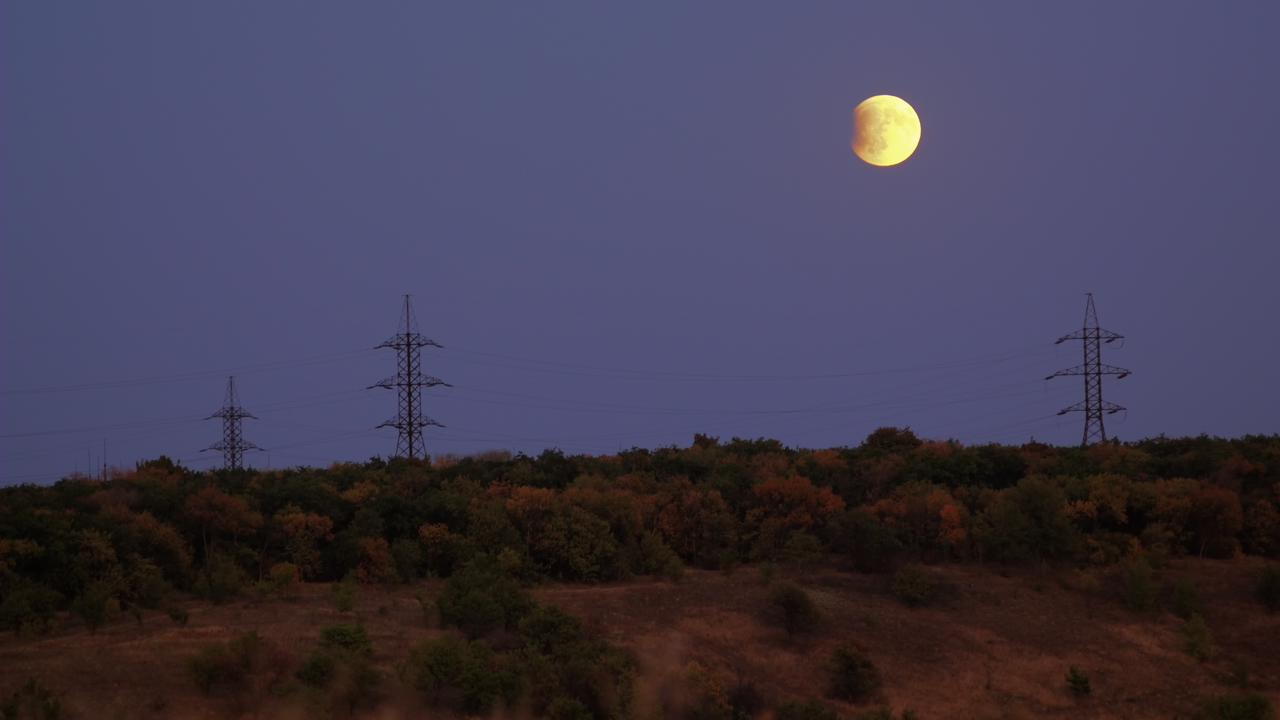
I’m glad I chose to meet the moonrise here. The location was perfect. But I didn’t linger long—the Moon was rising higher. I needed to return home to continue shooting through the telescope, which still needed setting up. Riding the bike with the Moon gradually slipping into shadow was especially atmospheric...
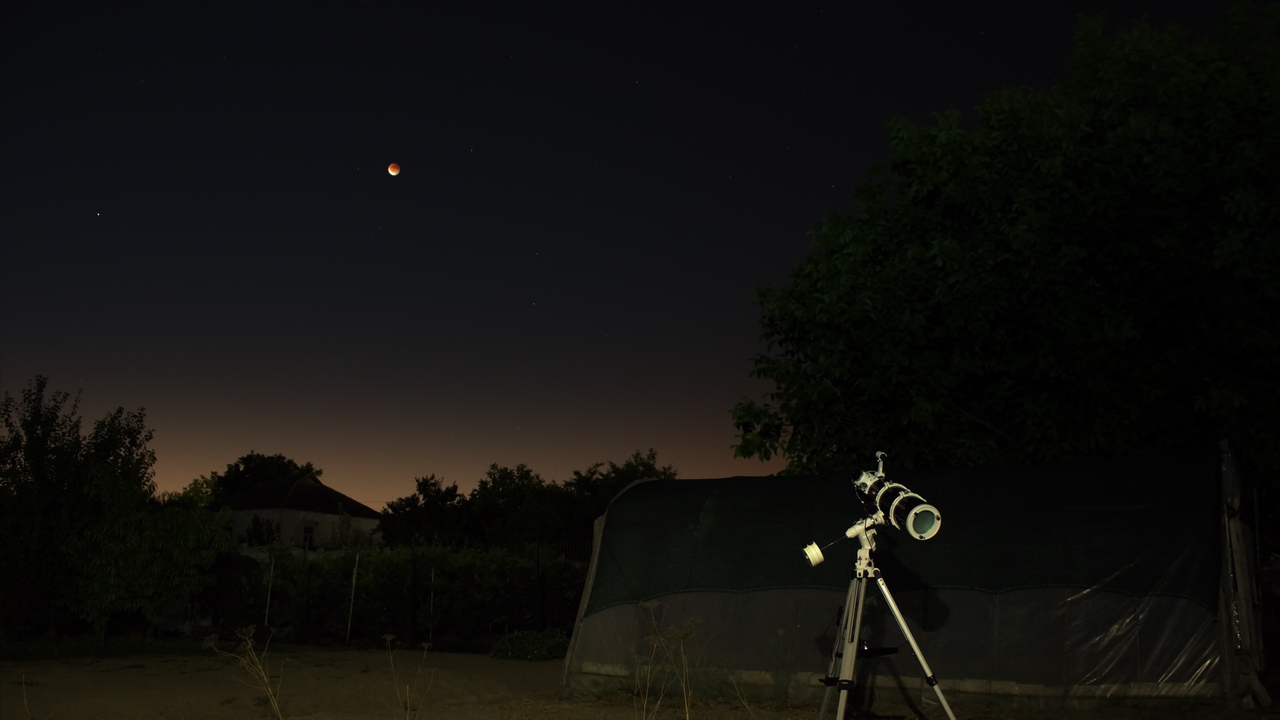
[ 20:03 ] While setting up and observing through the telescope, I also took photos with the Jupiter-37A lens—shooting and looking through the telescope at the same time isn’t very convenient. The Moon’s immersion in the shadow was already in full swing.
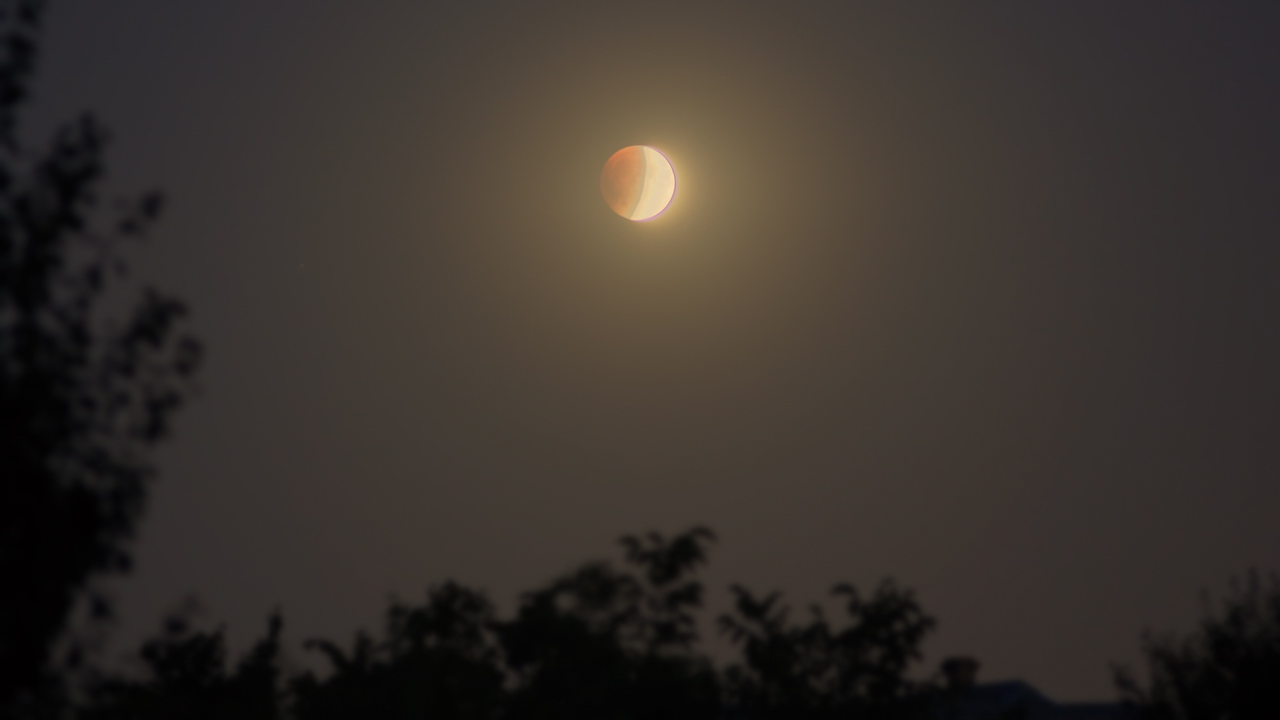
[ 20:28 ] Just minutes remained until full immersion. Only a thin bright strip was left on the Moon’s disk.
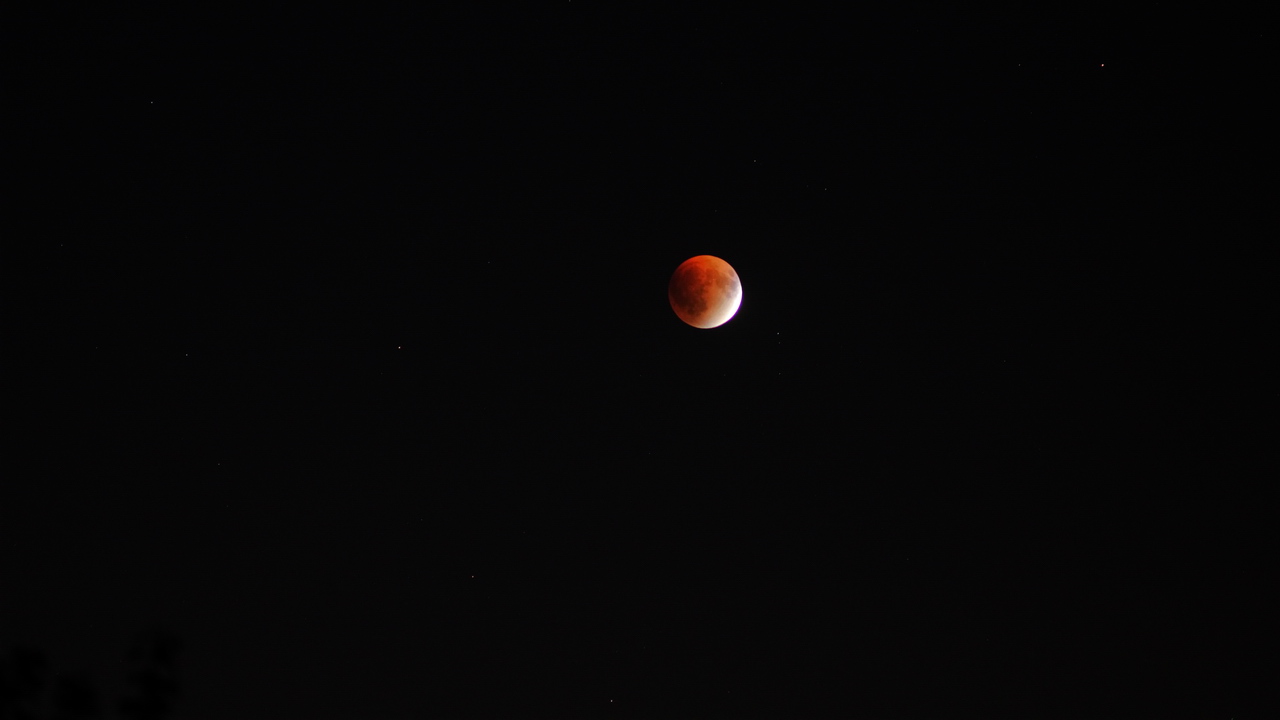
[ 20:36 ] Total immersion! Photo through the telescope. The quality, admittedly, was average—I even thought the telescope wasn’t properly set up. But then I remembered: at this moment, the Moon’s altitude was only 13°, and at such a low altitude, getting clear shots is nearly impossible. The atmosphere heavily distorted the image.
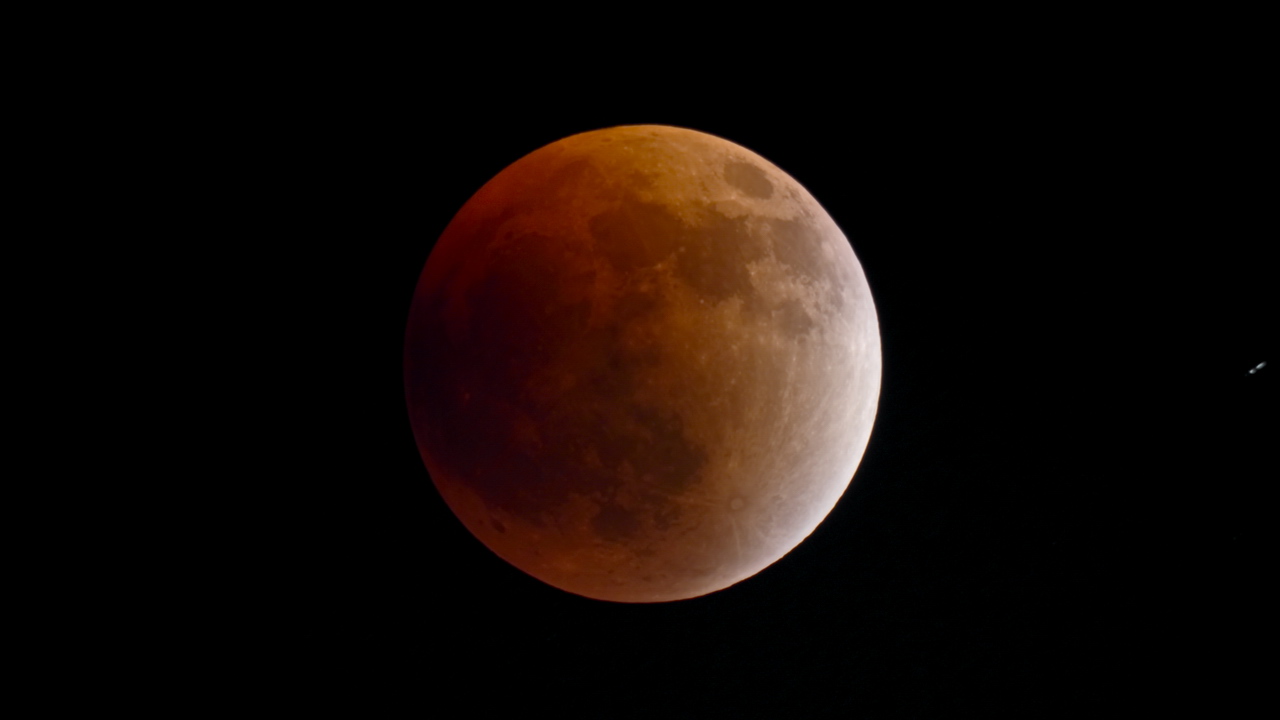
[ 21:12 ] The maximum of the eclipse. The Moon was fully immersed in Earth’s shadow and uniformly colored a dark red. The bright edge almost vanished, and the disk took on a soft “bloody” glow. The sight was striking and slightly mystical.
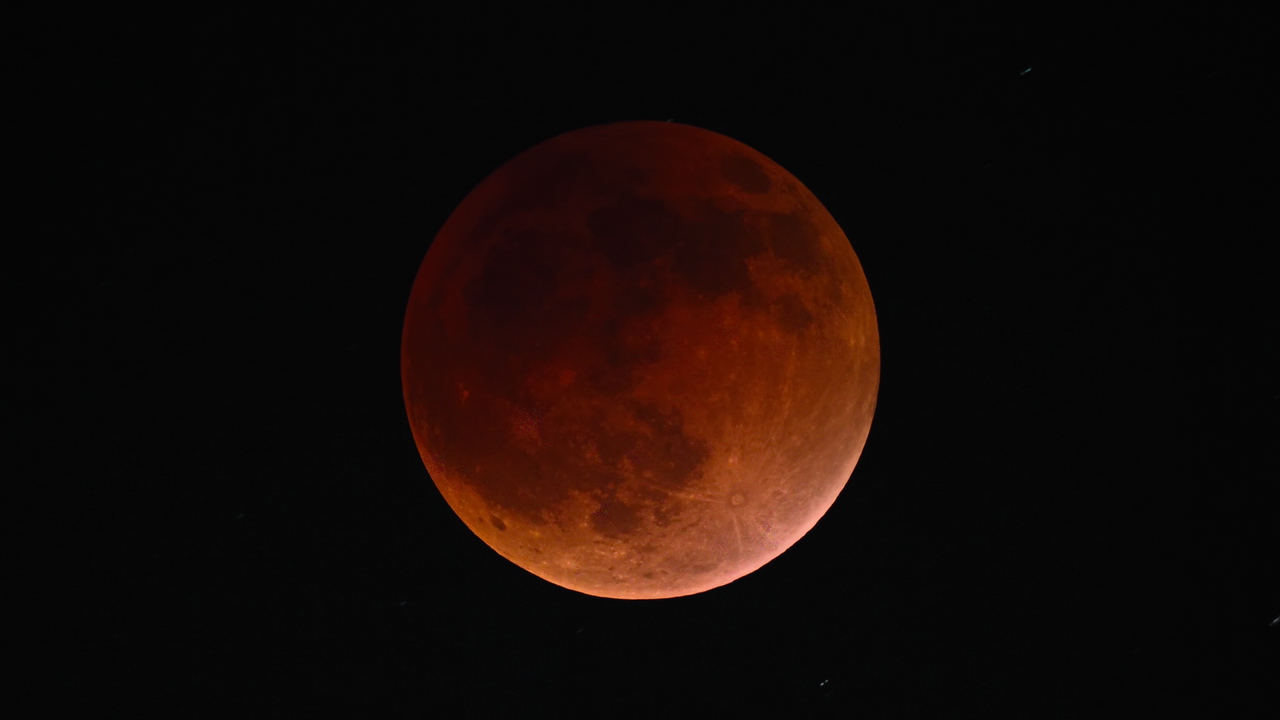
[ 21:52 ] The final minutes of the total phase before exiting the shadow.
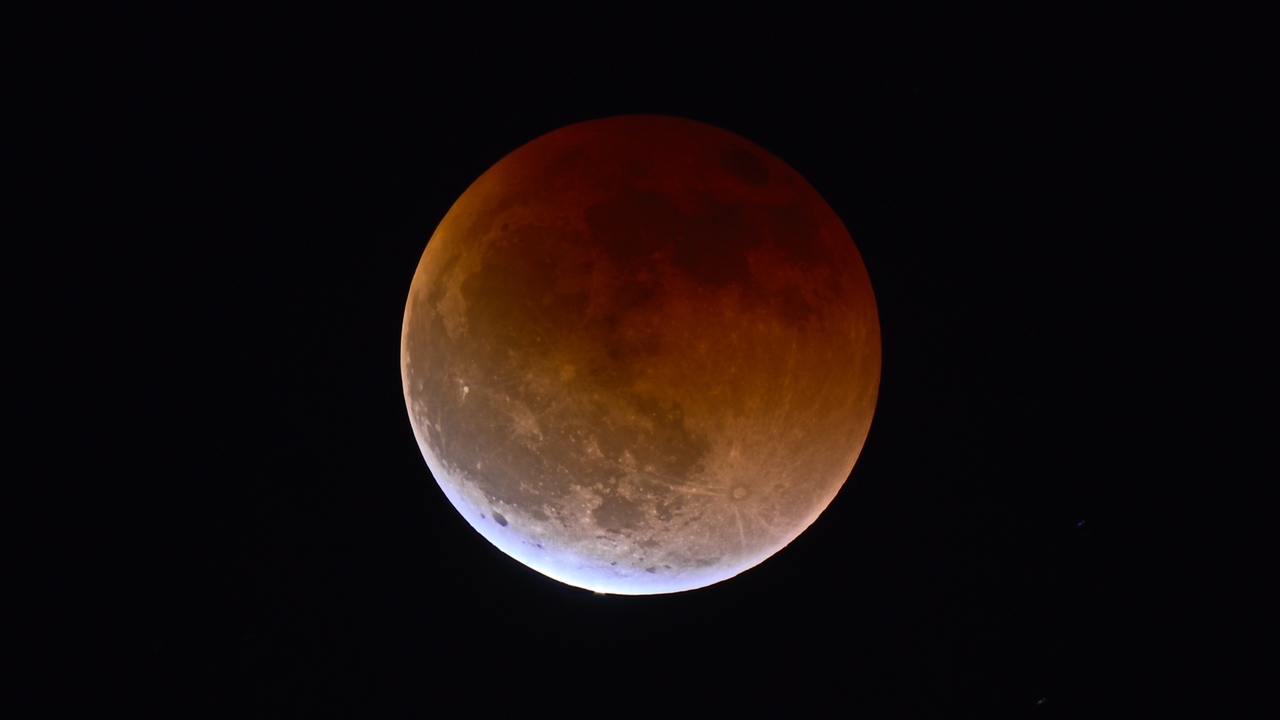
[ 21:57 ] The Moon began exiting the shadow. Photo quality noticeably improved: by this time, it had risen to 24° above the horizon, and the atmosphere’s impact lessened.
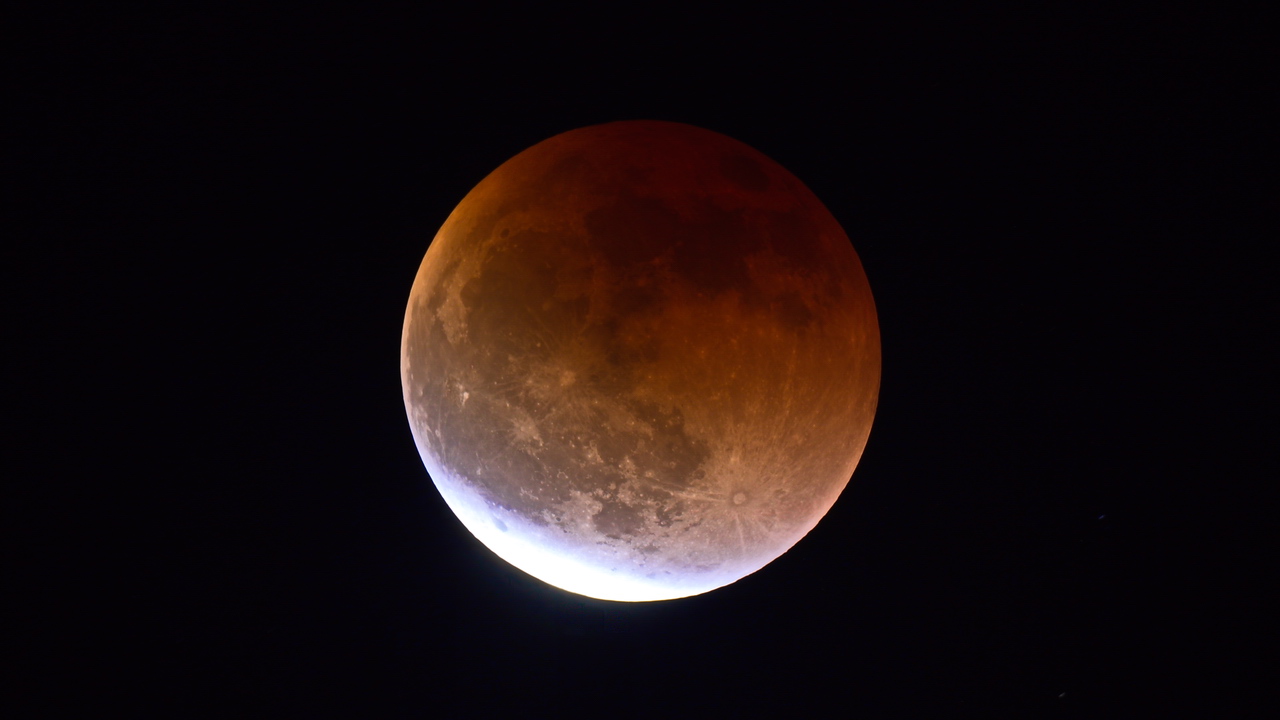
[ 22:05 ] The exit from the shadow continued. The bright part of the disk was rapidly growing.
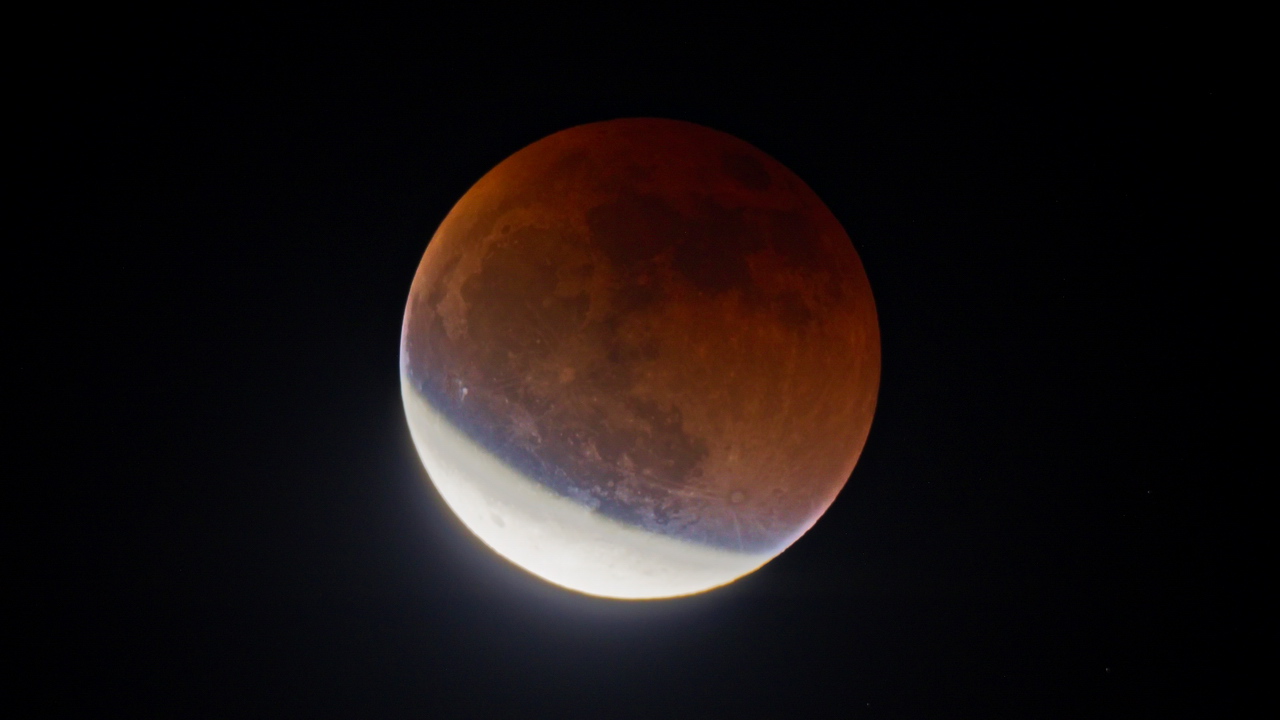
[ 22:11 ] Through the telescope, the image became noticeably sharper than at the start of observations. Details of the lunar surface became clearly visible.
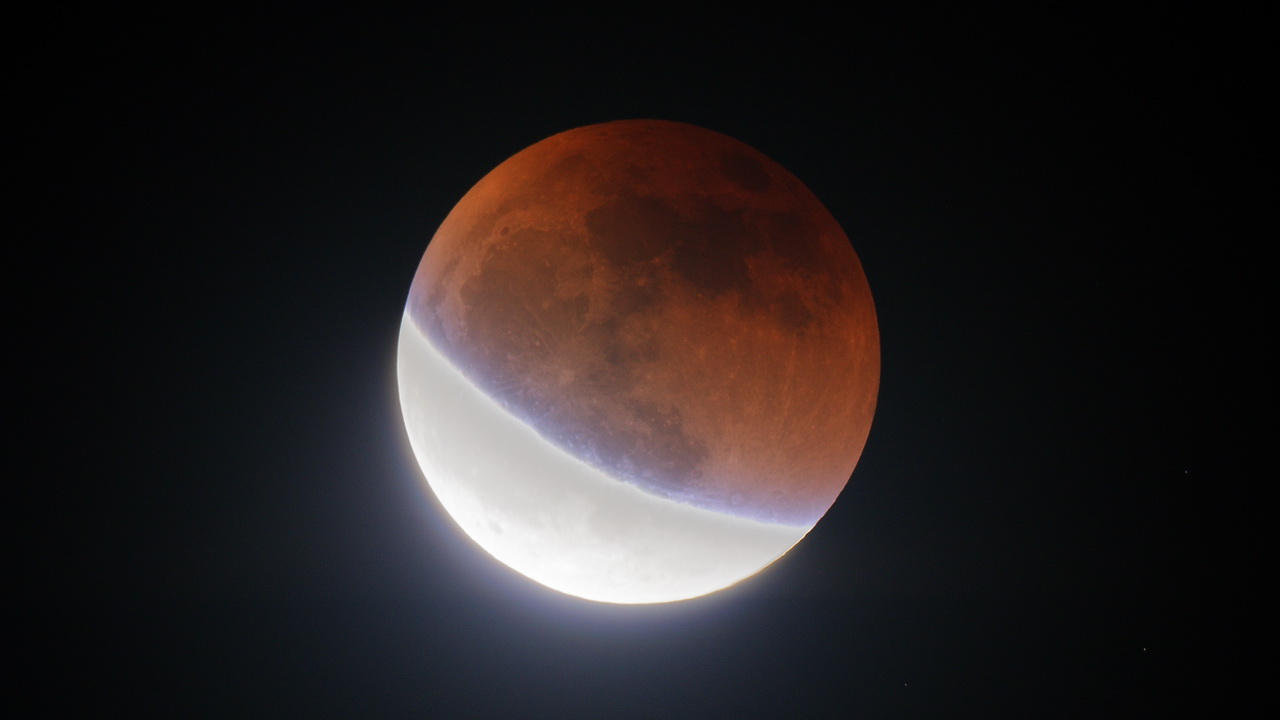
[ 22:56 ] The final contact with Earth’s shadow. Photo taken again with the Jupiter-37A lens.
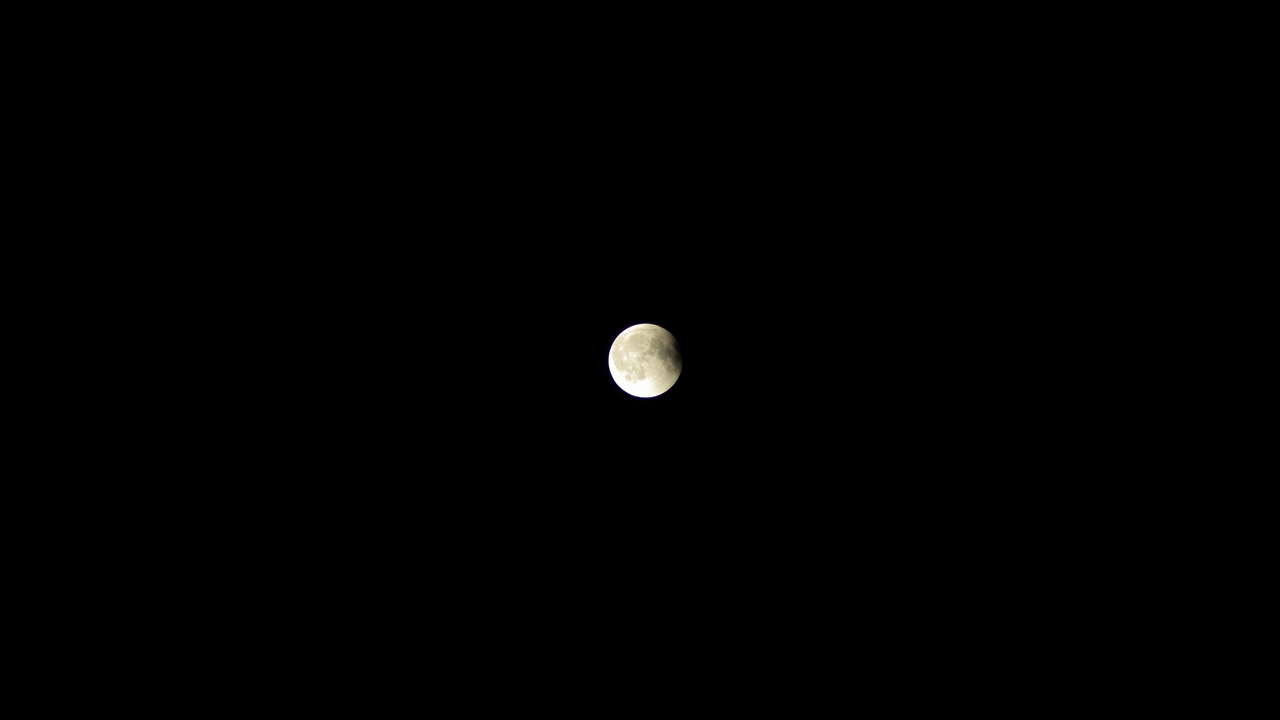
Toward the end of the observation, I decided to take a look at Saturn, which was near the Moon. I hadn’t observed it in a while. Seeing the planet with its rings, currently tilted edge-on, was interesting. But the atmosphere that evening was truly awful: strong distortions made high-magnification observations nearly impossible. I didn’t photograph it. Still, the Moon photos turned out quite decent despite the conditions.
[ 6:14 ] Since I captured the moonrise, I thought it would be nice to wrap up the observations with a shot of the moonset. This time, I didn’t go far and found a convenient spot in Diiivka, close to home.
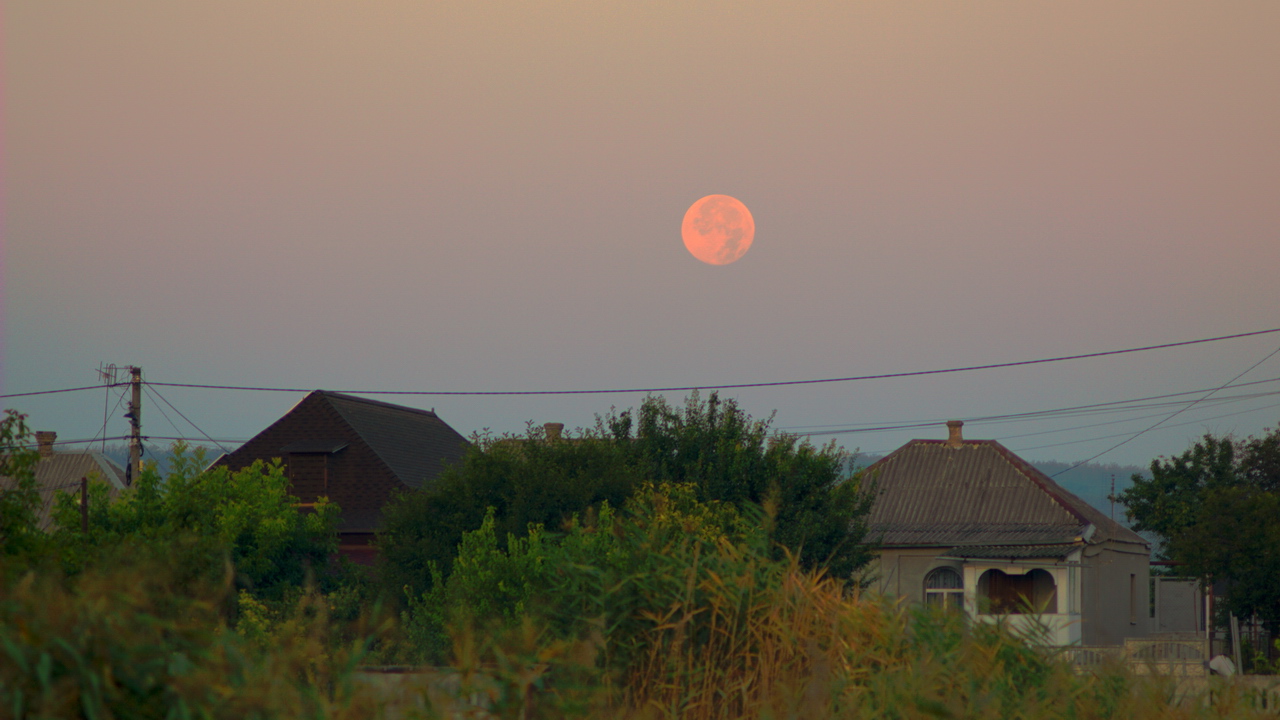
This was a truly fascinating observation: I managed to combine the eclipse with a short bike ride and photography of the Moon at both rise and set. Shooting through the telescope was challenging, but I’m pleased with the results—the photos turned out well.
The next total lunar eclipse will be on December 31, 2028. It’s also expected to be quite deep, but given the time of year, the chances of seeing it in our region are slim: December skies are almost always covered in clouds.